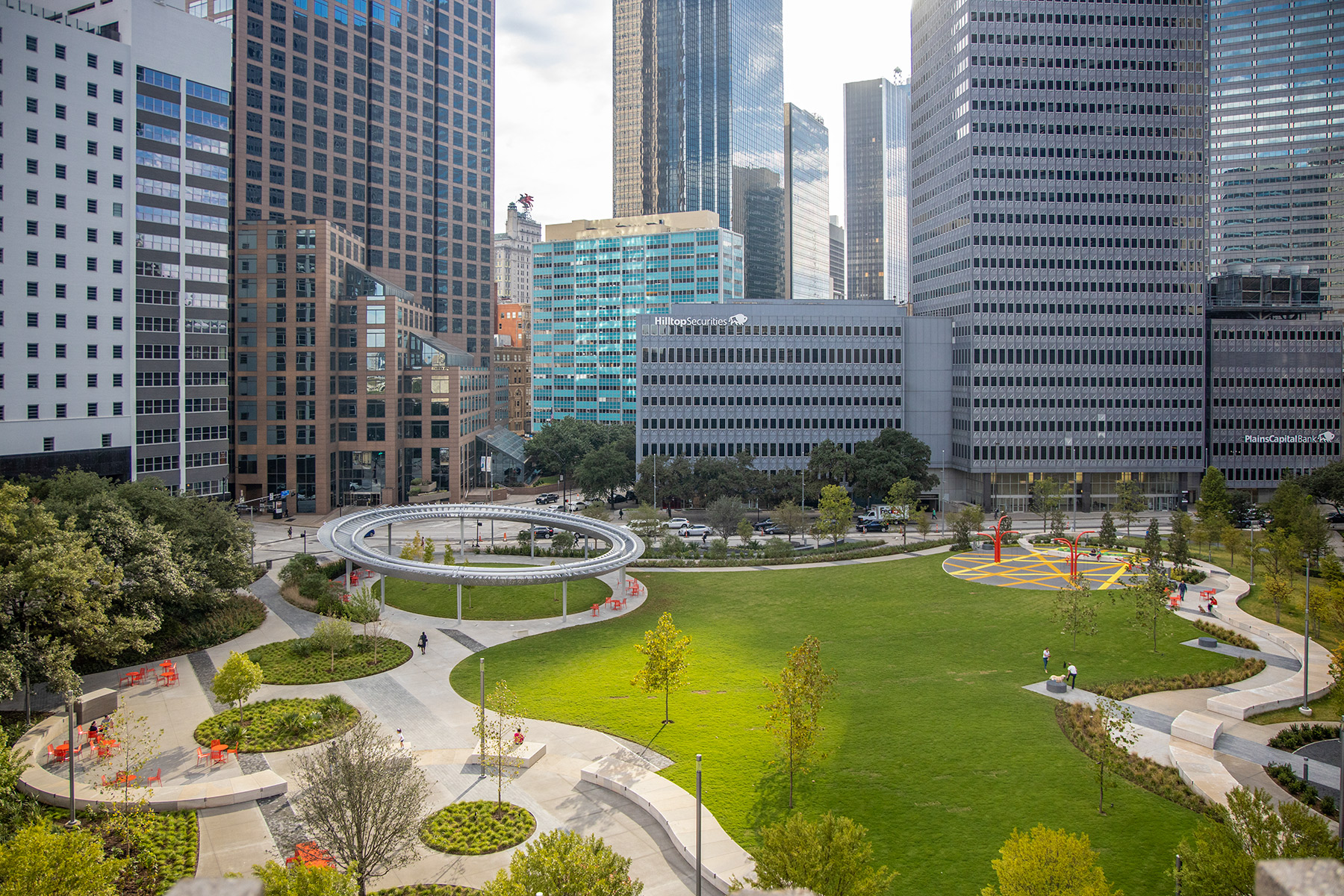

Okay, that’s a little sensational, but it’s not far off. Rich Blocks, Poor Blocks lets users zoom in on any city in America and look at the median household income, per census tract. It’s pretty basic information, and the Dallas map (right) doesn’t tell us anything we don’t already know. It is startling to see, however, how one of the city’s most affluent tracts (17.01, in the Arts District, with a median household income of $107,500) sits only one tract away from one of its poorest tracts (203, in and around Fair Park, where the median is $14,060). Peek around a bit.
26 PM” src=”http://frontburner.dmagazine.com/wp-content/uploads/2012/12/Screen-shot-2012-12-17-at-2.59.26-PM.png” alt=”" width=”635″ height=”491″ /> Source: The Texas Tribune
The Texas state budget tripled from 1992 to 2010, and now lawmakers want to amend the state Constitution to limit further expansion, the Texas Tribune reported today. The biannual budget grew to $187.5 billion from $62.8 billion, roughly 3.9 percent every two years, once inflation and population gains are considered. The 2012-13 budget fell to $173.5 billion, but the Legislature is likely to approve more spending when it convenes next year.
To fix this (they use the word “problem” but I’ll use:) situation, Governor Perry and Lite Guv Dewhurst are considering an amendment to the Constitution that would cap spending at the combined rate of inflation and population growth. Problem is, they don’t have as much backing as they may want/need:
The debate among Republicans over the state’s fiscal record exposed deep fissures in the party during this year’s primary. In his losing bid for U.S. Senate, Dewhurst vowed to bring the “Texas model” of fiscal restraint to Washington, a promise that was mocked by the winner, Ted Cruz, who had the support of Tea Party groups.
“In his entire tenure in elected office, he has never once cut one penny from the state budget,”Cruz said during a televised debate earlier this year.
At the time, Dewhurst accused Cruz of lying. Last month, Dewhurst said critics were still misinforming Texans about the state’s budget history.
“We have kept our spending as low as possible while, in my judgment, still funding our priorities,” he said, “and not enough credit is given to the members of the Legislature for that.”
The Constitution currently restricts budgetary growth to the rate of growth for state personal income, which is typically higher than the Perry/Dewhurst plan.
Florida is slated to become the first state with one million concealed firearm permits, Bloomberg reported yesterday. State officials issued 993,200 active permits as of Nov. 30, and are expected to pass the one million mark next week.
“Floridians have a great respect and appreciation for their Second Amendment rights,” said Adam Putnam, Florida’s commissioner of agriculture and consumer affairs.
This got me thinking about the Texas number. So I called the state department of public safety, and they sent me to their website (technology!). The numbers aren’t exactly apples-to-apples (the newest Texas numbers are for last year), but they still paint a picture where, despite all the Second Amendment bluster statewide, Texas actually trails Florida by a significant amount.
Data released by the U.S. Census Bureau this week show that Dallas County children, on whole, are poorer than not only most other Texas children, but most other children in America’s largest cities.
Close to 30 percent of children in Dallas County between the ages of five and 17 live in poverty, the numbers show, nearly a five percent increase since 2007. The below chart shows the poverty rates for those aged children, in Dallas-area counties:
Jump for even more disturbing news, and a few bright spots.
Kick around on Google Zeitgeist for a bit, and you’ll find some interesting nuggets. For instance: the fifth-most searched recipe in the United States was for something called “slutty brownies.” A thin, sultry strip of coconut down the middle? Or just brownies that everyone can enjoy? I don’t know.
Anyway, the list of Dallas’ top searches just slid across my desk:
1. Big Tex
2. Dallas Cowboys
3. Dallas Craigslist
4. Texas Rangers
5. Black Friday
6. Presidential Polls
7. Southern Methodist University
8. Dallas Mavericks
9. Studio Movie Grill
10. North Texas Tollway Authority
These all make sense to me, except for one. Do people really love eating food while watching movies so much that it nearly catapulted the term ahead of a team coming off an NBA championship?
Also: the poor Stars. Poor, poor Stars.
In a word: fine. They stack up fine. Yesterday, the George W. Bush Institute released its Global Report Card, which compares math and reading scores internationally. Every school district in the United States is accounted for, then compared to a list of 25 developed countries, mostly in Europe. The scores are from 2009, so recent improvements aren’t taken into account.
Dallas-area districts vary greatly, as is the case with most major metropolitan areas (play around with the New York and Chicago maps to see that statement in action).
After the jump I’ve broken down every Dallas County school district, and select districts from Tarrant, Denton, Collin, and Rockwall counties. The best performing districts are (not surprisingly) Coppell, Highland Park, and Carroll. Lovejoy ISD slides into the top four as well, which is surprising to me because it’s the first time I’ve ever heard of Lovejoy ISD and its 1,300 students.
The worst performing districts: Fort Worth, DeSoto, Dallas. Bringing up the bottom (by a wide margin) is Lancaster ISD.
Jump for 34 districts worth of data goodness:
As the fiscal cliff conversation heats up (three weeks to go!), its financial impact on Texas’ programs is starting to come into focus.
That includes an estimated $142 million reduction for Health and Human Services, a drop that will affect more than 300,000 clients statewide, HHS budget and fiscal policy director David Kinsey told the House Interim Committee yesterday. Affected programs include the Special Supplemental Nutrition Program (WIC), family violence prevention and service, and nutrition services for the aging and disabled. The short presentation after the jump lays out a few more details.
HHS isn’t the only department bracing. Burnt Orange Report wrote this morning that Texas public schools “stand to lose hundreds of millions of dollars, with Title I aid for the economically disadvantaged and IDEA funding for students with disabilities taking the biggest hit.” Nationally, education dollars could take a $4 million hit.
The front page of the Morning News today reads something like this: “Murder, MURDER, MURDER.” It’s effective, and I followed the jump to 9A. Bleeding, leading, etc.
The crux of the story is that, at 141 murders, we’ve surpassed the 2011 tally. That means the city is experiencing an increase in murders – not murder rate, which is calculated by population – something it has fought hard against since the murder tally peaked at 500 in 1991.
Yesterday afternoon, Dallas Police’s media department sent out the below document, highlighting these trends, stats, and do-dads. It’s worth a look:
The Census Bureau churned out some number this month showing the poverty percentages, per state, for the past three years. (I’ll beat you to the punch: during the past three years of the OBAMA administration) The picture for Texans, no matter the metric used, is bleak.
The report below (after the jump) is realllllly wonky, so I’ll break it down here.
Percentage of people in poverty, official three-year average:
Mississippi: 21.1 percent
New Mexico: 20 percent
Arizona: 19.2 percent
Louisiana: 19.1 percent
Georgia: 18.6 percent
Texas: 17.8 percent
The lowest? New Hampshire at 7.4 percent
The study also evaluated poverty using a metric known as the Supplemental Poverty Measure. Texas didn’t fare much better: it was still the 10th poorest state, per percentage of impoverished residents.
The New Yorker‘s Ryan Lizza spent some time with Senator-elect Ted Cruz, right before the election. In his very long piece, Lizza discusses immigration, and how those immigrants might turn dependably red states into blue states. And he’s not just talking foreign immigrants:
More than a million Americans have moved to Texas in the past decade, many from traditionally Democratic states. More than three hundred and fifty thousand Californians have arrived in the past five years; since 2005, over a hundred thousand Louisianans permanently relocated to Texas, mostly in Houston, after Hurricane Katrina. The population is also skewing younger, which means more Democratic. But [state Republican Party chairman Steve Munisteri]  is more preoccupied by the racial and ethnic changes.
He turned to a chart showing Texas’s population by ethnic group over the next few decades. A red line, representing the white population, plunged from almost fifty-five per cent, in 2000, to almost twenty-five per cent, in 2040; a blue line, the Hispanic population, climbed from thirty-two per cent to almost sixty per cent during the same period. He pointed to the spot where the two lines crossed, as if it augured a potential apocalypse. “This shows when Hispanics will become the largest group in the state,” he said. “That’s somewhere in 2014. We’re almost at 2013!” He added, “You cannot have a situation with the Hispanic community that we’ve had for forty years with the African-American community, where it’s a bloc of votes that you almost write off. You can’t do that with a group of citizens that are going to compose a majority of this state by 2020, and which will be a plurality of this state in about a year and a half.”
So, 2014? Maybe?
Thinking about this morning’s Leading Off item about the 8-year-old kid bringing a loaded gun to school, I decided to try to help keep this from happening again. How? This chart.