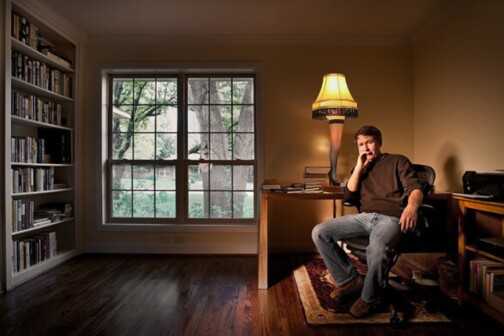
No, Ben doesn't have the lamp from A Christmas Story. But he SHOULD.Fountain photo by Elizabeth Lavin
Yet more proof that Dallas is a banging literary city. First the New York Times gives some of our guys some shine, and now Ben Fountain wins the 2024 Joyce Carol Oates Prize. He’ll pocket $50,000 and head out for a residency at UC Berkley. Plus, on May 23, he’ll do an online chat with JCO herself. Details are here. (And if you don’t know who Ben is, please get yourself up to speed by reading Zac Crain’s profile of him from the May 2012 issue of D Magazine.)
Ben, a hearty congratulations from your favorite city magazine. Your lamp is on the way. Be careful. It is fra-geel-ay.
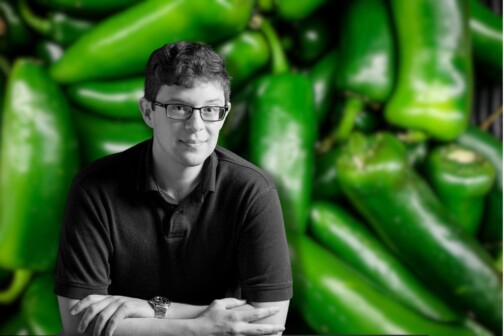
Here’s one of the things I love about our dining critic, Brian Reinhart: when he notices something curious, he doesn’t just throw up a post on Twitter about it and then go back to watching baseball. Nope, Brian starts digging.
That’s what he did last year when he noticed that jalapeños in grocery stores seemed to have less fire than he remembered. Is that actually the case? And, if so, why have they grown more mild? The result of his curiosity was an article that has, for a year, continued to draw an astounding amount of traffic to our little outpost. The headline and sub: “Here’s Why Jalapeño Peppers Are Less Spicy Than Ever: Throw out those bogus shopping tips about pepper size. Decades of deliberate planning created a less-hot jalapeño.”
Well, the folks at Slate read that article, and they decided to do even more digging. They found the actual inventor of the less-spicy pepper. The result of their efforts is an episode of the podcast Decoder Ring that just dropped. I’ve listened to just a few minutes so far, but this is good stuff. Worth your time:
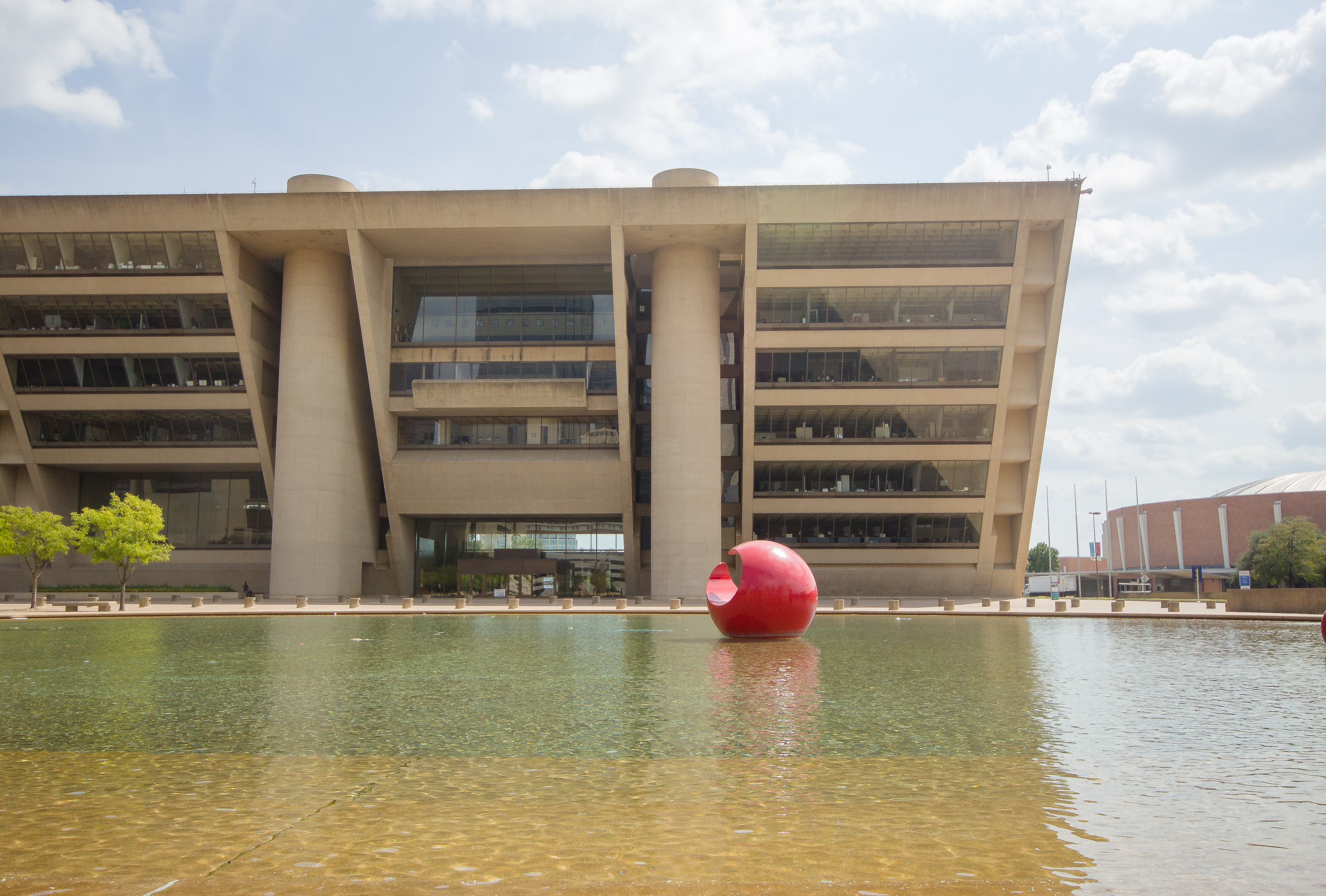
A deceptively quiet-looking Dallas City Hall. Photo by Kelsey Shoemaker.
Kimberly Bizor Tolbert hasn’t waited to make changes at City Hall since becoming Dallas’ interim city manager on May 2. The new boss has shaken up the organizational chart and outlined her goals for the first 100 days.
In an email to the Dallas City Council yesterday, Tolbert announced that interim Dallas Water Utilities director Sarah Standifer would change her title to permanent director. The move may be seen by many City Hall watchers as controversial, particularly those who count themselves among our city’s environmental hawks. Standifer notably was atop the department that oversaw managing the Trinity River and the watershed when environmental snafus seemed common, like a borrow pit and a drained wetland pond that attracted the attention of the state in the forest near where the Trinity Forest Golf Club was being built.
Standifer joined the city in 2002 and was appointed interim director of the city’s water utility in June 2023, when her predecessor, Terry Lowery, retired. In her email, Tolbert cited Standifer’s expertise in water and wastewater management, as well as her affiliations with the Trinity Regional Flood Board, National Waterways Conference, and Association of Metropolitan Water Agencies.
In the same email, Tolbert also announced that Emily Liu has been hired as Director of Planning and Urban Design. Liu comes from Louisville, Kentucky, where she held a similar role. Tolbert said that Liu had been with Louisville for more than a decade, with much of that time spent leading the planning department. She has also worked in Illinois and Ohio and, in 2022, became the first woman in Kentucky to be inducted into the College of Fellows of the American Institute of Certified Planners. She’ll report to work in Dallas on May 20.
“Emily has broad expertise across various aspects of urban planning and design, such as long-range planning, zoning, housing, transportation, urban design, and historic preservation,” Tolbert wrote. “She was pivotal in leading Louisville’s acclaimed Zoning Reform initiative, which has been recognized as a model for other cities.”
Michael, if it would make you more comfortable, you can absolutely use a handheld mic when you do our announcements.Stephen Luke, CC BY 2.0 , via Wikimedia Commons
Two days ago—is it really only Wednesday?—I mentioned in my Leading Off post that former Cowboys wide receiver and mink coat enthusiast Michael Irvin was out at the NFL Network, his longtime post-playing career home. I added that we could probably find a desk for Irvin at D HQ.
I wasn’t joking then, and I’m not joking now. Since I can’t prove that the Playmaker is not a regular FrontBurner reader, I am going to address him directly from here on out. So, here goes.
Michael, this is a formal offer: come work with us.
What would you do? Short answer: whatever you want. (Within reason! We have lawyers on retainer but not enough to fully defend a “White House”-level scandal.) Long answer: whaaaaaateverrrrr yoooooouuuu waaaaaant.
Sorry. Off the top of my head, I think you would be a natural at heading up our weekly Monday Morning Huddles. No offense at all to Cory, who works upstairs and is a real champ at being the emcee of that particular shindig at the moment, a post he has held for some time. But, I mean, even if you have Harrison Barnes playing small forward, you don’t say no if Kevin Durant wants the spot. You know? Cory is a natural with dad jokes. But he cannot compete when it comes to wearing a tie with a knot the size of the Incredible Hulk’s fist.
If you want to write, we have essentially an infinite amount of room at our sports site, StrongSide, and you obviously have the requisite ability to fire off A Take, not to mention the kind of on-field (or court) experience that currently is lacking from our roster of writers. Or maybe you’d prefer to take on a new challenge. I’m sure your sartorial expertise could find a fairly natural fit at D Weddings, since we tend to see things from a bride-heavy POV. Or SideDish. Everyone likes to eat.
OK, now, as far as salary goes, I’m not saying we won’t pay you, but we certainly won’t pay you at the level you are used to, not as a pro athlete or even a broadcaster. But you can expect Tiff’s Treats cookies on the reg (they just show up, and I’m almost never clear why), and some restaurant or bar brings us lunch or afternoon snacks and/or drinks generally a few times a month, or else there are sandwiches or whatever left over from meetings. Speaking of leftovers, occasionally we have an event in the office and for a week or two afterward, there are spare beers in the fridge. So: desk beers.
Also, we are about to set up a cornhole game in the hall.
Stars, Mavs Both LoseGame 1. Different sports, different story, same result. The Stars blew a 3-0 lead and lost by a goal in overtime while the Dallas Mavericks looked tired and wounded while getting run off the court in the fourth quarter by the young Oklahoma City Thunder. Stay tuned to StrongSide; analysis is coming.
Rashee Rice Can’t Just Stay Home. The Kansas City Chiefs receiver, who is already charged with eight felonies related to a hit-and-run racing incident, is now under investigation for an assault at a downtown nightclub. Rice, an SMU graduate, is accused of hitting a photographer at 609 N. Harwood Street, which houses Lit Kitchen and Lounge and the speakeasy venue Feu. Police are interviewing witnesses about the incident.
Dallas Considers Rebates for Switching to Electric Lawn Equipment. The city may stand up a $750,000 program that reimburses single-family homeowners for switching from gas to electric lawn equipment. The city’s environmental higher ups expect about 3,500 families to benefit, which could include $50 for blowers and $100 for push mowers. The effort is a push to reduce emissions, and about half of the city’s 200,000 single-family homeowners still have gas equipment. (As a longtime member of the Ryobi Gang, I’d like some free money for being an early adopter.)
Cold Front! Today will be Houston, all muggy and warm, but a springtime cold front is on the way. Severe weather is a possibility, but the highest chances for problems are southeast of the metro area. Highs will be in the low 90s today before falling to the high 70s and low 80s through Mother’s Day weekend.
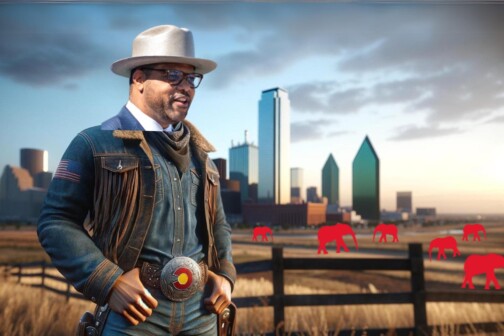
The Office of the Mayor just issued a press release. I would like to share it with you and then comment on it in a way that is intended to be humorous but also (just slightly) insightful. Here’s the first part of the press release:
DALLAS — Dallas Mayor Eric L. Johnson and Denver Mayor Mike Johnston announced a friendly wager ahead of the second-round NHL Western Conference playoff series between the Dallas Stars and the Colorado Avalanche. If the Dallas Stars beat the Colorado Avalanche, Mayor Johnston will gift a Denver flag belt buckle to Mayor Johnson. If the Avalanche beat the Stars, Mayor Johnson will gift a Texas-style belt buckle to Mayor Johnston.
My first thought is that the mayor is stuck in a betting rut. You’ll recall that in 2023, when Errol Spence Jr. fought Terence Crawford, the mayor wagered a belt buckle against some Omaha Steaks with Mayor Jean Stothert. Spence lost the fight. No steak for you!
My second thought is we’ve got Johnson wagering against Johnston, which reminds me of when we traded City Attorney Larry Casto for Chris Caso. Copy editors, beware!
My third thought is about belts. Do these buckles come with belts? They should. And if that’s the case, I have some advice for Denver Mayor Johnson. Er, Johnston.
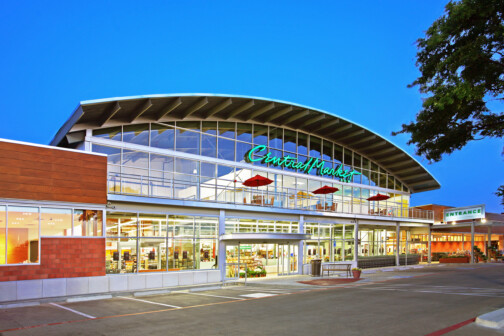
The Central Market at Preston and Royal, which was rebuilt after being destroyed in a tornado.
No one wants to discuss what is happening with the vacant Albertson’s at Lemmon and McKinney in Uptown after years of excitement about a massive mixed-use project anchored by a Central Market.
The property remains vacant at one of the busiest corners of Uptown, with its high fence and deteriorating parking lot begging for development. After a much-hyped announcement about a residential tower near the upscale grocer, it appears most likely that the property’s future will be a Central Market built on the existing footprint of the old Albertson’s grocery store.
Two years ago, the ambitious proposal made headlines. The Dallas Business Journal reported in February 2022 that developer KDC would break ground that April on the $295 million project, which, according to a filing with the state of Texas, was supposed to include 1.7 million square feet of total space with three stories of office and another 23 levels of multifamily. Five stories of multifamily was also in the plans for an adjacent mid-rise building. The anchor tenant was a Central Market and included a four-story underground parking garage.
Now two years later, there has been no movement on a project that was supposed to be finished in 2025. First announced by developer KDC in 2018, the original plans included an office tower and hotel. Next, it was set to be part of Central Market parent company HEB’s expansion into North Texas. HEB has opened several stores in North Texas suburbs, and still has plans for a Central Market in Oak Cliff near the Bishop Arts District. The company is also building several of HEB’s discount locations, Joe V’s Smart Shop.
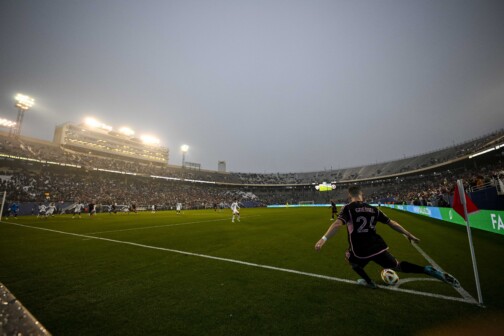
The last soccer game played at the Cotton Bowl was between FC Dallas and Inter Miami in January. Could a new deal to put a professional sports team in the historic stadium involve a new women's soccer league?Jerome Miron-USA TODAY Sports
When the mysterious “Project X” appeared on a Dallas City Council committee agenda in late March, we (along with a lot of other people) began guessing about who it involved. Council members were tight-lipped because the discussion involved attorneys and was held in closed session.
Maybe the Ad Hoc Committee on Professional Sports Recruitment and Retention and the Council Economic Development Committee was discussing strategies to keep the Mavs in town past their 2030 lease end with American Airlines Center.
Or maybe Mayor Eric Johnson’s interest in the negotiations around the Kansas City Chiefs’ stadium in Kansas City was a Dallas Texans shaped clue.
And then the city announced that the Dallas Wings would move from Arlington to Dallas, where they will begin playing at the Kay Bailey Hutchison Convention Center Memorial Arena after the 2025 season. That was surely Project X, right?
No. No it was not. The Ad Hoc Committee on Professional Sports Recruitment and Retention had another meeting about Project X last week. We confirmed then that Project X was not Wings-related. We entertained a few other potential theories — another MLS franchise, or maybe cricket.
But maybe our long local speculation is finally at an end. The Council is set to vote on a deal that would allow a new professional sports team to use the Cotton Bowl for its season, with the city providing an annual subsidy “not to exceed $296,000 per year” for the next two years to Fair Park First and operators Oak View Group for expenses related to accommodating the new team.
The resolution the Council will vote on doesn’t name the team, but the Dallas Morning Newsfloated the idea that it was the Dallas franchise for a new women’s pro-soccer league—the USL Super League. Nobody would comment on the record, and when we asked the PR firm associated with the as-yet unnamed Dallas club if this was Project X and if the team would be calling the Cotton Bowl home, but they also could not confirm that Project X and the Dallas USL Super League team were one and the same.
“It’s my understanding that Project X has been used historically to refer to different projects through the years,” said Angela Lang with Tony Fay PR.
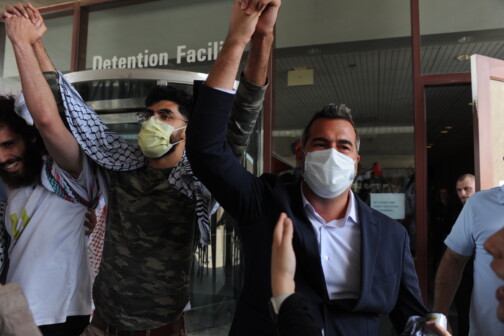
History professor Ben Wright, wearing a suit, photographed after being released from the Collin County Jail on May 2, 2024. Yaakub Ira
I am a history professor at the University of Texas at Dallas. At 4:03 p.m. on Wednesday, May 1, I was arrested along with 20 other faculty, students, alumni, and community members.
Fifteen minutes earlier, university administrators released a statement assuring the protection of peaceful student protest and freedom of speech. Along with this assurance came an immediate order to disperse a student-created “Gaza Liberation” encampment calling for the university to divest from five weapons companies responsible for the systematic killing of Palestinian people. As a historian, I teach my students about the importance of citing sources with clarity and specificity, so I noticed that the order did not reference any specific campus policies. Still, I attempted to comply.
A ring of students locked arms and sat calmly at the center of the encampment. A colleague and I stood silently well outside the encampment but between the students and the army of riot-gear-clad state troopers, who were flanked by officers from at least four other law enforcement agencies. They massed in front of what appeared to be a tank. Behind us, another professor implored the advancing officers that force was unnecessary. I had no illusion that an out-of-shape, middle-aged professor could actually offer physical protection for my students, but I believe in peaceful protest. This was my attempt to demonstrate disapproval of an extreme and unnecessary show of force. For this, I was arrested with 20 others. We face up to six months in jail on charges of criminal trespassing at the university where we study, teach, and learn.
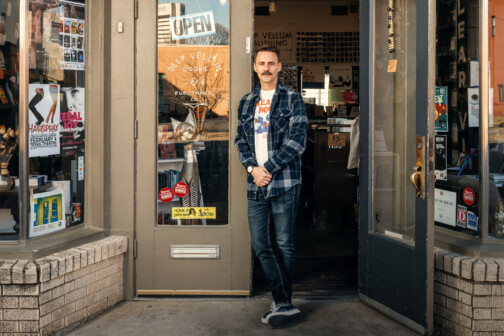
Evans' next goal: to do well enough that he is never asked if Dallas is a literary town again.Sean Berry
Will Evans is really into books. In 2013, unable to restrain himself, he started a publishing house specializing in translations called Deep Vellum. A couple of years later, he opened a bookstore in Deep Ellum with the same name (3000 Commerce St., 469-781-4881). In recognition of his obsessive efforts, this month the French government is bestowing on him the Chevalier de l’Ordre des Arts et des Lettres.
What exactly is a Chevalier de l’Ordre des Arts et des Lettres, and does it get you through TSA faster? It’s a knighthood, and it goes through the French Ministry of Culture. We have more books in translation from French than any other publisher in the history of the English language. We’ve brought a lot of French authors to the U.S., and we’ve hosted a lot of French authors at the bookstore. In terms of TSA, though, they haven’t given me the list of benefits yet. I was hoping it would let me cut in line at the Louvre or get me 20 percent off at Shakespeare and Company. But it’s my first knighthood. It’s not one to be trifled with.
Women’s Soccer Coming to Cotton Bowl? We’ve been speculating what Project X is, the mysterious item that keeps showing up on the agenda for the Ad Hoc Committee on Professional Sports Recruitment and Retention. Looks like we’ve got our answer: a team in the new women’s USL Super League. The full Council is scheduled to vote tomorrow on whether to spend $300,000 per season to bring an unnamed team to the Cotton Bowl for 16 home games, and the as yet unnamed local team will hold an event at Klyde Warren Park Thursday to reveal itself. Everton Bailey Jr. got a bunch of “no comment”s from all involved, but he seems to have solved the mystery.
Dallas Has Low Unemployment. Ever heard of the Ludwig Institute for Shared Economic Prosperity? It analyzes “true unemployment,” which differs from the official rate of unemployment in ways that are important but which I will not go into here because it’s early and I’m only halfway awake. In any case, Axios lets us know that Dallas is among the metro areas with the lowest true unemployment.
Sports Sophie’s Choice Tonight. the Mavs and Stars both play tonight at 8:30. Remember when I asked the trenchant question: “Which game gets the sound in the bar?” Hope you got it figured out.
Advertisement
Page Cached: 2024-05-08 20:10:01 on http://www03.dmagazine.com